This glossary is to help people who study or work in biomedical science field. You will find definitions, examples and images of many words that are used in the field! You can always refer to the glossary if you don't understand the meaning of a word in a text or in a presentation. I hope this will help you!
antibiotic
noun
A medicine (such as penicillin or its derivatives) that inhibits the growth of or destroys microorganisms.
Example: This ANTIBIOTIC has no effect on the protein synthesis in the eukaryotic cytoplasm.
en: antibiotique
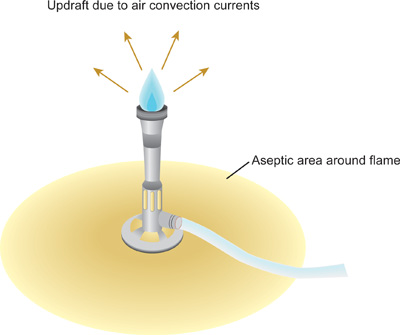
aseptic field
noun
A controlled workspace used to promote asepsis during a clinical procedure.
Example: A general ASEPTIC FIELD is used when the procedure can be undertaken using a standard non-touch aseptic technique, such as a simple wound dressing.
en: champ aseptique
axon
noun
The long threadlike part of a nerve cell along which impulses are conducted from the cell body to other cells.
Example: The AXON of each odorant receptor is targeted to a particular point in the olfactory bulb, such that all cells expressing the same receptor synapse with one set of interneurons, patched together in glomeruli.
en: axone
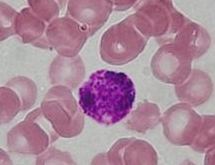
basophil
noun
A type of immune cell that has granules (small particles) with enzymes that are released during allergic reactions and asthma.
Example: A chemical signal is sent to the BASOPHIL causing the basophil cell to release histamine, serotonin, bradykinin, and "slow-reacting-substance.".
en: basophile
dehiscence
noun
The splitting or bursting open of a pod or wound.
Example: It is important to observe the wound site for any signs of infection following surgery or any indication of DEHISCENCE so that prompt action can be taken.
en: déhiscence
dialysis
noun
The clinical purification of blood by dialysis, as a substitute for the normal function of the kidney.
Example: Kidney failure is incredibly debilitating, the only treatments being transplant or daily DIALYSIS treatment, without which the patient will die.
en: dialyse
diaschisis
noun
A loss of function due to depression of activity at some distance from a lesion.
Example: The site of the originally damaged area and of the DIASCHISIS are connected to each other by neurons.
en: diaschisis
electrocardiogram
noun
A record or display of a person's heartbeat produced by electrocardiography.
Example: Such a diagnosis can be confirmed from ELECTROCARDIOGRAM tracings and levels of cardiac enzymes such as troponin T.
en: électrocardiogramme
electrophoresis
noun
The movement of charged particles in a fluid or gel under the influence of an electric field.
Example: Isoelectric focusing is a type of ELECTROPHORESIS that involves the separation of amphoteric sample components in a pH gradient.
en: électrophorèse
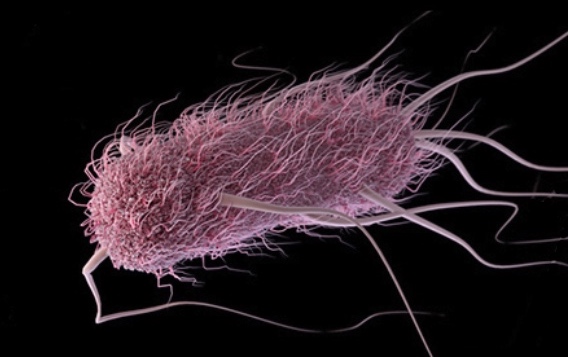
Escherichia coli
noun
Are bacteria found in the environment, foods, and intestines of people and animals.
Example: C.elegans is a small round-worm, approximately 1 mm long, that lives for 2-3 weeks and can be fed on ESCHERICHIA COLI , which allows large numbers to be conveniently raised in a Petri dish.
en: Escherichia coli
fasciculations
noun
Visible fast, fine, spontaneous and intermittent contractions of muscle fibers.
Example: Results from lesions to the corticospinal tract and the anterior horn cells and produces the characteristic feature of tonic atrophy - brisk reflexes and FASCICULATIONS.
en: fasciculations
fibroblast
noun
A cell in connective tissue which produces collagen and other fibers.
Example: For example, human ES cells rely on embryonic FIBROBLAST feeders to maintain their undifferentiated phenotype (Przyborski, et al , 2004).
en: fibroblaste
histopathology
noun
The study of changes in tissues caused by disease.
Example: HISTOPATHOLOGY is performed by a specialist doctor, called a pathologist, who examines tissue under a microscope.
en: histopathologie
laryngoscopy
noun
A laryngoscopy is a procedure healthcare providers use to examine your larynx (voice box).
Example: In a direct LARYNGOSCOPY, the doctor can use different types of laryngoscopes, which are long, thin instruments with a light and a lens or small video camera on the end.
en: laryngoscopie
lymphoma
noun
Lymphoma is a broad term for cancer that begins in cells of the lymph system.
Example: Patients can often die from infection or it can evolve into a high-grade large-cell non-Hodgkin's LYMPHOMA 'Richter's transformation', which is more aggressive and difficult to treat.
en: lymphome
microorganism
noun
A microscopic organism, especially a bacterium, virus, or fungus.
Example: Molecular disease does not arise due to infection from a MICROORGANISM, although some viruses can induce a mutation leading to the molecular disease cancer.
en: micro-organisme
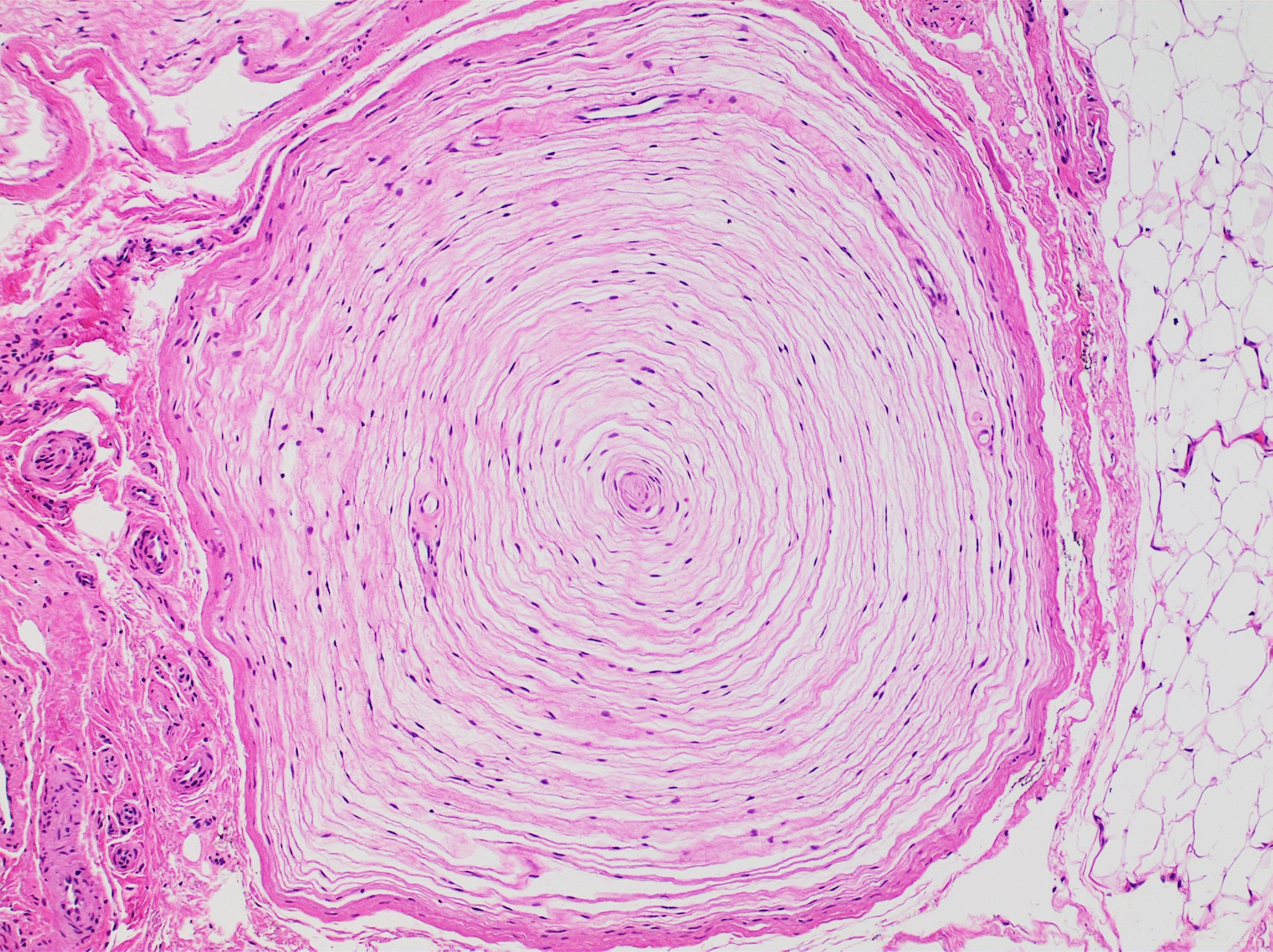
Pacinian corpuscle
noun
An encapsulated ending of a sensory nerve that acts as a receptor for pressure and vibration.
Example: PACINIAN CORPUSCLES were the first cellular sensory receptor ever observed.
en: corpuscule de Pacini
pathogenic
adjective
(of a bacterium, virus, or other microorganism) causing disease.
Example: These include the spread of antibiotic resistant genes to PATHOGENIC bacteria, the creation of new viruses and disease causing bacteria and the transfer of transgenic DNA into human cells, causing cancer.
en: pathogène
polysaccharides
noun
A carbohydrate (e.g. starch, cellulose, or glycogen) whose molecules consist of a number of sugar molecules bonded together.
Example: A microbial biofilm consists of bacterial colonies attached to each other and their surface by the secretion of adhesive POLYSACCHARIDES.
en: polysaccharides
recombinant
adjective
Relating to or denoting an organism, cell, or genetic material formed by recombination.
Example: The RECOMBINANT DNA is then inserted into a bacterium, in which reproduction occurs.
en: recombinant
sarcolemma
noun
The plasma membrane of the muscle cell and is surrounded by basement membrane and endomysial connective tissue.
Example: A special feature of the SARCOLEMMA is that it invaginates into the sarcoplasm of the muscle cell, forming membranous tubules radially and longitudinally within the fiber called T-tubules or transverse tubules.
en: sarcolème
vasodilation
noun
The dilatation of blood vessels, which decreases blood pressure.
Example: VASODILATION occurs naturally in response to low oxygen levels or increases in body temperature.
en: vasodilatation
viral transduction
noun
Viral transduction is the biological process by which DNA is transferred into a cell with the aid of a viral vector.
Example: During generalized VIRAL TRANSDUCTION, random sections of bacterial DNA are packaged into a phage and transferred into another bacterium, wherein the DNA is either recycled or exchanged for a homologous region in the new host’s genome.